Jailhouse Blues – by Jason Renard Walker

How I lived, what I ate

And what I wore is not who I am.

My skin is my sin,

Which was dealt to me

Like a shantytown hustler’s sleight-of-hand win.

I ask for my freedom

But I’m told no such thing exists.

I’m told I’m not human,

I’m not worthy and I am not a man.

If I’m am not a man and you are,

Why do I slave and thrive above your soil?

Isn’t a man one who can harvest his own spoils?

Better yet, for his family’s sake to stay alive,

Doesn’t a man struggle to survive and provide?

Not coward out when the stocks drop,

Buy a gun from the hood and commit suicide.

This is not a case of Jason versus the state.

This is a case of a proletarian against capitalism,

A momentum shift to determine our own fate.

Don’t hate, participate, I just peeped your game.

You threw dust and debris in my mother’s face

And I thought she was to blame for years on end.

The torch was passed to me and I ran with it.

Before I knew it, it went out faster than I could think,

Faster than I could breathe and faster than I could blink.

Just like that, this legacy continued its wrath,

And was predisposed and rehearsed before my first bath.

I am so full of shame, full of hate, and tired of deceit,

That I can only sit back, laugh,

And remove these invisible chains from my feet,

Like a losing team’s cleats after a lopsided defeat.

It seems like every time I’m in for the score,

The ref throws the flag and the clock stops,

Clearly giving my opponents a free shot.

Even though they aren’t panting and in debt,

I give them a drink for their health

And a better way to distribute their wealth.

Principal contradiction, I look down on you,

Like you look down on your slaves.

Don’t be stupid, this is not about race.

This is a class struggle

And nobody’s safe from its

Round ‘em up and ship ‘em out

Mass incarceration haste.

I am blind to your hand to help me

But conscious to your plan to sell me,

Distribute me and bun me, like my mother’s keeper

Her true love, her desire, her features.

Fortunately, This Did Not Happen to You – by Mark Jordan

Dear Friend:

Imagine that you are going about your daily business, maybe walking down the street, keys in hand, and just as you turn the corner you stumble upon a horrible crime, a murder. You happen to be acquainted with the victim, a former schoolmate. What’s more, as the murderer flees you recognize him as your neighbor, Frank, who you always found to be a bit of a shady character and was even rumored to have a criminal record.

Now suppose that after you summon the police for help, you and Frank and a few others are taken to the station for questioning. Inexplicably and beyond comprehension, the police release everyone but you, who they arrest and charge with murder. It turns out, unbeknownst to you, that Frank was a favored confidential informant for the officers assigned to investigate the case and had pointed his finger at you. But Frank is hardly credible. Indeed, he gives a series of facially false, sometimes fantastical, and inconsistent versions of events surrounding the murder, all obvious fabrications intended to shift blame to someone else.

The trial date arrives, and instead of putting Frank on the stand the prosecutor calls one of Franks criminal cohorts, Jack, who was in the vicinity when and where the crime occurred and testifies that he’d seen you kill the victim. You can only sit and listen, visibly upset and utterly flabbergasted, but you continue to hold on to faith in the criminal justice process. Surely the system will protect the innocent.

Finally, it is your turn to put on evidence and your attorney, an experienced litigator, requests that Frank, the very person you had stumbled upon in the murderous act, be called to testify. You have no doubt that once his lies and prior inconsistencies surrounding the murder — all conveniently fabricated to put the crime on you — are heard by the jury, it will see right through the farce and just as assuredly see you exonerated. But the prosecutor also realizes this and, not one to lose so easily, immediately objects. The judge takes up the prosecutor’s cause and rules that your attorney may not question Frank on the stand as to his murder of your schoolmate because he has not been charged and no other evidence has been presented against him and, therefore, the judge continues, his testimony runs the risk of confusing the jury. That jury, never having heard about Frank or his prior falsehoods or motives or opportunity, wrongfully convicts you of murder.

Fortunately, this did not happen to you. But it is precisely what happened to me. Please find out more, including what you might do to help, by going to www.freemarkjordan.com.

Thank you for taking the time to read this letter.

The Ironic Tempest – by Ross Hartwell

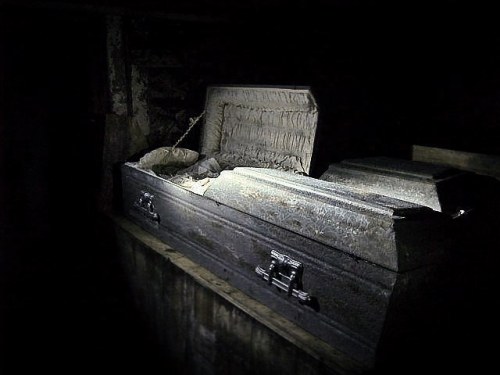
Granite bulwarks and wrought iron barriers lay half buried in sand and mud. The sepulcher’s quiet inhabitants pulled into the sea by a hungry surf. Others survive the draw of receding breakers and lay on the lawn in confused foiled resurrection. The dead’s private, eternal time, intruded upon by the elements and wandering eyes of squawking seagulls and roving killdeers.

From the ground, caskets have popped up; like a child releases her submerged rubber ducky, the earth lets go of her prey: soulless bodies too buoyant to keep their vessels sunken: plain pine boxes and intricately decorated brass caskets: death’s equity hidden by life’s inequality. Hank drags his tired boots through the debris. His eyes locked onto the small path, shame and sadness are blinders. The mound of freshly turned soil beckons for daddy’s attention, but what’s the point. He’s proven that all the attention in the world cannot keep love alive.

The funeral: a week ago: a mile up the beach, Allie was taken into the storm; her own casket empty of more than an innocent soul. For Hank, seven days are one endless night. For now, time blankets no memory. The floral arrangements have wilted, providing a vivid, flaccid jungle for dozens of teddy bears and other knickknacks.

Years ago a greedy funeral planner provided a discount on cemetery property. He stands beside the space formerly reserved for him — in the other is the wife’s empty box — her body was never recovered after she jumped from their anniversary cruise a decade ago. Now his spot, filled with his daughter’s vacant casket, leaves Hank wondering if there will ever be a place to bury his own broken spirit. The monument company has yet to replace his tempered name with Allie’s.

He stares at the infinite half-inch between his wife’s name and his own. A blank space beckons for the date of his own demise. The rustling of a recent newspaper, blown against a nearby tombstone, catches his attention. Hurricane Hollie Annihilates The Texas Coast. Returning attention to the absent family, he brushes his fingers across the raised letters next to his and mouths the name he once wrote on the top of love letters and spray-painted on the lighthouse wall, the name he spoke after lifting the wedding vale, the name he screamed out during passionate couplings, the name he cried throughout lonely nights weeping, and the name which never leaves the empty yet haunted house sitting on his shoulders. “Well Hollie, looks like you’ve come roaring back into my life, and once again left it in shambles.”

On their second anniversary, Hank’s wife jumped from the bow of the cruise-liner, Serenity. She left their daughter, Allie, with him for ten years before returning in a whirlwind to assert custody. An inability to properly deal with grief prevented Hank from sharing memories of Hollie with Allie. The two were so alike that Hank had attempted to fit his well-rounded daughter into the complex hexagon of her mother. He had yet to learn that love never kept anyone alive. People keep love alive. Hollie and Allie share the ocean. Hank has no-one to share his memories.

Write to Ross at:

Texas Dept. of Criminal Justice
Ross Hartwell 1893452, Memorial Unit
PO Box 660400
Dallas, TX 75266

Bloody Beaumont: Texas’ Most Murderous Federal Penitentiary Overachieves, Living Up to Its Name – by Jason Renard Walker

“When you look at the policies and goals of the Security Management Unit, it blows my mind that there was [even] one homicide” – Jack Donson, corrections consultant and former FBOP official on violence at USP Thompson

Edgar Garcia and Mark Snarr couldn’t have scripted the murder of Gabriel Rhone any better. Given that each of them were in single cells and were only allowed out after a thorough strip search and handcuffing, such a feat seemed more like a Pipedream,or a fantasy. It would first require an insurmountable plot, straight out of an action packed prison escape movie. Anything less wouldn’t work. 

Guards would have to forget, or ignore, strip searching them coming out their Security Management Unit (SMU) cell for recreation, and going back in.Check! 

They would have to overlook the fact that one of these inmates was under a two man guard escort only order,which would over emphasize that two inmates can’t be pulled out at the same time. Double check! 

A prison disturbance would have to ensue, causing recreation to be terminated early and discombobulation.Triple check! 

The guards would have to believe that the inmates’ need to use the bathroom is more important than the need to follow policy, allowing two inmates in particular to be removed from their recreation cages at the same time,for security convenience. Quadruple check! 

No different than a blockbuster suspense thriller, every element that needed to be met, was met. A disturbance in another part of the prison ensued,resulting in guards being ordered to stop rec and put each inmate back in their cell,one by one. Since one of them claimed he had to use the bathroom, officers Dewight Baloney and Josh McQueen took a routine gamble and skipped the order they were going in and removed Garcia and Snarr from their single man recreation cages together. 

Since time was limited these inmates weren’t strip searched, according to policy, coming out or going back into their cells. Thus the makeshift handcuff keys and shanks weren’t discovered. Fellow neighbors and Rhone, who had listened to Garcia and Snarr plot this movie-like murder through their cell doors days before, silently listened as the plot thickened down the corridor from them and the handcuffs fell free from behind Garcia and Snarr’s backs. 

Officer Baloney was stabbed twenty three times until he slipped to safety. McQueen was approached by Snarr and stabbed while a demand for the cell door keys was made. A poke of the shank by Garcia and the keys were yielded to Snarr from McQueen’s duty belt. Both inmates excitedly dashed down the corridor to Rhone’s cell. It was time for him to pay for talking shit and ejaculating on a female guards shoe,through his cell door slot.(1) 

It took a minute of Snarr fumbling with the keys to get the right one into the keyhole, while threats were made to Rhone as a pregame filler. Just like that, the cell door opened and out came a panicking Rhone. One inmate in particular that watched the gruesome stabbing claimed both killers were in a “frenzy” stabbing Rhone over fifty times in the heart, lungs and liver, as guards pleaded for them to stop. On May 24 2010 a jury sentenced them to death by lethal injection. 

Overkills like this one is why inmates in the federal United States Penitentiary in Beaumont Texas, USP Beaumont, quickly named the maximum security prison ‘Bloody Beaumont’ not long after it opened in 1997. 

It would only take until 2001 before the USP claimed its fifth victim, Luther Plant, who was killed in a two man recreation cage by Shannon Agofsky. Agofsky was serving a life sentence for the 1989 kidnapping and murder of State Bank of Noel president, Dan Short. Plant’s head was repeatedly stomped in the ground by Afgosky, until he choked to death on his own blood. 

On July 17 2004, a jury sentenced Agofsky to death by lethal injection. Inmates that were questioned about the incident, claim that guards often place at odds inmates in the two man cages together and watch them fight, thus giving the recreation cages names such as ‘gladiator school’ and ‘thunder dome’. 

Officer Christopher Matt, who admitted placing Agofsky and Plant in the same cage together, denied having knowledge of the gladiator school activities. And surmised that he didn’t know a murder was about to take place, nor did he see the fight.(2)

Bloody Beaumont had only been in business for two years, when on December 16 1999 one of its first five murders occurred. The victim, Daryl Brown. The accused, Arzell Gulley and David Lee Jackson. According to court documents all three inmates were seen arguing with each other in an area of the prison called the compound. Here, inmates throughout the prison are allowed to intermingle between 5:00pm and 8:30pm. 

Brown could be seen fleeing the compound and into unit 3B-1, and eventually cell 125, while knife-wielding Gulley and Jackson chased after him. Just under a minute later, Gulley and Jackson strolled out of the cell and were met by prison guards,who apprehended them. A bloody and half dead Brown then stumbled out of the cell,collapsing near one of his killers where he died.(3) 

In 2006 Jackson was sentenced to death by lethal injection for his role and Gulley received life in prison. As a whole, administrative officials have no control over any federal prison within the Federal Bureau Of Prisons(FBOP). So in an effort to tone down the violence, it is expected that gang leaders will run the prison for them, creating unwritten rules, punishing violators and warring with gangs that try to impose their own counterproductive authority. And many try. 

One gang,mainly consisting of El Salvadoran immigrants, MS-13 is not only the most violent prison and street gang in America, it was undeterred by the intimidation tactics imposed by the other federal prison gangs. 

Federal prison officials saw this too, so the federal government created a gang intelligence group within the FBOP called Joint Taskforce Vulcan, which focuses on the activities of gangs in general and MS-13’s violent rise within the federal prison system in particular. 

On January 31 2022, this joint task force operation proves ineffective. 54 year old Guillermo Riojas, 34 year old Andrew Pineda and two other Hispanic inmates belonging to the Mexican Mafia and Sureños gangs respectively, were ambushed by seven members of MS-13.(4) The group felt it was time to bust up the unity that Mexican Mafia and the Sureños created to strengthen their numbers against the larger MS-13. 

Riojas and Pineda received the worst of the punishment as Pineda was stabbed around 45 times and Riojas was stabbed multiple times in the heart and lungs.The other two unnamed inmates were the only survivors. The 15 count indictment includes charges of racketeering, murder and attempted murder. All 120 of the FBOP’s prisons were placed on temporary lockdown status, in anticipation of subsequent riots and vengeance. 

On February 24 2022, the lockdown was fully lifted and normal prison operations continued. On May 1 2022, Bloody Beaumont would give up her latest victim. This time, it’s 35 year old Eric Jermaine Leday, who has no documented gang affiliation. He was serving a 37 month sentence for gun related charges.(5) 

Since his death was deemed unrelated to the prior ambush, his body was shipped to the morgue and immediately thereafter, prison business carried on as usual, as if nothing out of the ordinary had occurred. 

According to the Department Of Justice’s Bureau of Justice Statistics, the federal prison population has grown 1% since 2001.While the annual murder rate inflated by 44% from 39 a year to 120 in 2018. But in regards to the accuracy of these numbers, the full extent of FBOP mismanagement can’t be fully reported because of the highly effective damage control routine by its press corps and its ability to restrict public access to information. 

Many relatives of victims that died while incarcerated, find themselves being fed partially true statements, outright lies, being given the run around and having their Freedom Of Information Act requests denied, or painstakingly delayed. In many instances, it isn’t administrative prison officials who know the truth about what goes on in prison, but unspoken inmate witnesses and their ilk. 

If prison walls could talk, the amount of in-custody deaths that are ruled suicides, erotic asphyxiation, overdoses and undetermined would literally clog up the courts dockets with staff-instigated murder cases and their co-conspirators, who sometimes are other inmates and their relatives in the free world.(6) 

One thing that is widely known among staff and the incarcerated, is that when death calls your name, it can only be prolonged or countered, but never escaped unscathed. 

The violence that goes on at places like Bloody Beaumont, on its face, is senseless. Though there are many contributing factors that can compel someone to play within, or step out of their comfort zone and commit murder. To believe violence exists in prison without a spark is buffoonery. 

One factor lies in the clutches of the underground drug trade. Another can stem from violating inmate-created penitentiary rules. Another is behooved by the kind of inmates you have in federal custody, the resources they bring with them and the fact that their reputation from the free world is jocked by those on the lower rungs of criminalization. In effect, they must hold themselves to this same standard or lose social value, which connects to respect, power and their chances of surviving among the masses. 

Observing an active member of a drug cartel, mafia, or street enterprise carousing on the compound, is as common as a cavity search. And adding this with the lethal mix of convicted millionaires and money-hungry guards that are overworked and underpaid, and you have an unregulated, untaxable, underground economy and environment, that is virtually indestructibly violent, extortive and bribable within the highest levels of the administration. 

Before Bloody Beaumont came into fruition, the inmates living in the federal prison system called it Club Fed. Which was due to the average prisoner residing there being either affluent, or were involved in crimes and schemes designed to meet that status quo, making it a felon’s Club Med.

Remember the commercial? Likewise, they spent their prison sentences enjoying the fruits of their labor and the vast amount of privilege given to them, that has since been slowly stripped to a bare minimum. Which has a lot to do with the fact that many small-time cases that get prosecuted under federal law now, never left the clutches of state prosecutors then. 

Plus the Racketeer Influenced and Corrupt Organizations Act (RICO), created to bring down entire Mafias, for the actions of one of its members, eventually began preying on ineligible, neighborhood gangs that had never risen above low-level drug dealing. 

On top of the fact that anybody convicted in the District of Columbia (D.C.) and sentenced to prison, does their time in a federal facility, regardless if it’s a federal charge or not, as D.C. doesn’t have a state prison system. 

As a consequence, Club Fed was watered down with reams of petty criminals that brought their petty tendencies and violence with them. In effort to match this speed, the FBOP took away most of the privileges and leeway that the new wave started taking for granted. Which was masked by accommodating budget cuts. 

BLACK MARKET DEATH SENTENCES – THE USP WAY 

On May 6 2005, an inmate named Keith Barnes arrived to Bloody Beaumont, well aware that he would be killed immediately. In 1998 Barnes and several others were convicted for the murder and robbery of Israel ‘Dog’ Jones in a Washington D.C. apartment. Despite receiving hand-written death threats from James ‘Rat’ Carpenter, a co-defendant who actually killed Jones in his apartment, Barnes testified against his cronies in exchange for a lesser sentence. 

This resulted in Barnes being threatened and sought, each time he was transferred to a different federal prison to protect him from his co-defendants’ vast connections within the FBOP. 

Hon. Eleanor Holmes Norton, a D.C. congresswoman, wrote letters to the FBOP on his behalf, just as relatives did to no avail. Barnes explained his situation to his case worker, upon arriving to Bloody Beaumont, but he was sent to the general population anyways. 

Marwin Mosley, Michael Bacote and Charles Sherman (all D.C. residents) approached Barnes as soon as he hit the cellblock. He didn’t give them his real name because he knew there was a hit out on his life. 

It is routine that newly arriving inmates are asked who they are and where they’re from, in which they are pointed to where the denizens of their geographical location mingle, or are dealt with accordingly if their name has a green light on it. 

Mosley thought he recognized Barnes as being the one that testified against Carpenter and explained this to Joseph Ebron.His real name was quickly figured out and a plot to kill him made. Within less than twenty four hours of Barnes arrival to Bloody Beaumont, he was discovered on his top bunk with over one hundred stab wounds in his body.(7) 

After Sherman was investigated by officials, he fingered Ebron, Mosley and Bacote as the killers. In 2005 Ebron, Mosley and Bacote were convicted for Barnes’s death. Ebron was the only defendant that was sentenced to death by lethal injection. Mosley died in 2006,resulting in the dismissal of his pending court appeals. 

A LITTLE TOO MUCH TOUCHING UP? 

Christopher Cramer and Ricky Fackrell are members of a federal prison based group called Soldiers of Aryan Culture(SAC). Cramer served as its General, while Fackrell held the rank of Lieutenant during their stay at Bloody Beaumont. Among other rules and regulations, all members must sustain from drinking alcohol, doing drugs and gambling. 

According to Fackrell’s own statement during his trial, one of the penalties of rule violations is to “touch the violator up a little bit”. Members are recruited based on their belief in white supremacy and paganism. 

According to both Cramer and Fackrell, an unranked member by the name of Leo Johns had been caught drinking and gambling, in violation of SAC rules. While Johns was in his own cell, Cramer and Fackrell entered it with shanks. Johns was stabbed up until he died. 

On June 13 2018, Cramer and Fackrell were convicted of Johns’ death and sentenced to death by lethal injection. While Fackrell suggested to the courts that their intention wasn’t to kill, but only meant to “touch up [Johns] a little bit”.(8) One can only wonder where the line to what one uses to “do a little touching up” with is drawn. And the illogical thought that, had Johns survived, he would’ve held his allegiance with the group. 

United States attorney, Britt Featherston who prosecutes federal cases in the eastern district of Texas, promised that any inmate who causes physical injury to another person will be prosecuted to the fullest extent of the law. 

Nowhere in her diatribe did she suggest,or recommend, remedies that would curtail the death sentences that are being handed out like candy. And you can see from the frequency in overkill deaths, that the punishment for doing such a thing isn’t a hardcore enough measure, that will deter future inmates from attempting to top past slaughterings. 

Nor have past reform measures done anything besides increase sentences and already full court dockets. Since the 1994 crime bill was signed into law by Bill Clinton, making all murders committed in federal custody death penalty eligible, the amount of murders that were committed afterwards skyrocketed, while the amount of inmates placed on federal death row increased to unprecedented numbers.

BLOODY BEAUMONT’S EVIL TWIN 

While Bloody Beaumont might be the most violent federal prison in Texas, when measured up to the rest of the United States Penitentiaries (USPs) under the jurisdiction of the FBOP, it can bee seen as the nicer twin of a more sinister, more diabolical Juggernaut. 

Bloody Beaumont is just one of the three federal correctional complexes grouped together in Beaumont, Texas. The other two complexes are minimum and medium security compounds, that contrast to Bloody Beaumont’s reputation for violence. 

Overall, every USP in America is virtually a house of death. Factors that determine who goes to a USP and who doesn’t, is based off of criminal history, gang affiliation, current criminal charges and the amount of points all of these factors generate. There are other factors that can reduce these points,such as taking responsibility for the charge, becoming a government informant and maintaining good behavior while there. 

The majority of inmates incarcerated at USPs used to be mob bosses, gang leaders, drug lords, high profile drug dealers and terroristic and paramilitary networks. Now it’s this same mixture, coupled with obviously nonviolent inmates. With a twist of sociopaths that were sent to them from other prisons because of recent and past disciplinary issues, like assaulting and murdering other inmates. 

In 2002, Carlos David Caro was serving time at a low security prison in Oakdale, Louisiana. As he had risen to the rank as leader of the Texas Syndicate (TS) prison gang, Staff approached him and gave him the heads up that rivals of TS were scheduled to be transferred to Oakdale. They asked him if he would keep the peace. 

Upon their arrival to Oakdale, Caro launched an attack on them. He beat one so bad that he was hospitalized. With bloody clothes and boots, Caro told guards “I don’t give a fuck if they send me to the USP. My brothers follow orders. They know what they’re getting themselves into. It doesn’t even matter if we’re prosecuted”(9) 

Shortly after the assault, Caro was transferred to USP Lee in Jonesville, Virginia. In August 2003, Caro and another member of TS stabbed another inmate twenty nine times, resulting in Caro being placed in the prison’s Secure Housing Unit (SHU). The SHU and SMU are basically one and the same. Double man solitary confinement. 

Caro eventually pleaded guilty to conspiracy to commit murder and was sentenced to an additional twenty seven years in federal prison. On December 17 2003, less than two days after Roberto Sandoval’s arrival as Caro’s new cellmate, Caro wet a towel, wrapped it around Sandoval’s neck and strangled him to death. 

As guards walked by during their security check, Caro got their attention, showed them Sandoval’s body and demanded that they remove it because it was stinking up the cell. Caro justified this act by claiming Sandoval had disrespected him for confronting Caro about eating Sandoval’s breakfast while he was asleep. 

Days later Caro jokingly confronted a guard about when they would give him another cellmate. Of course, Caro was convicted and sentenced to death by lethal injection for Sandoval’s death. On September 14 2018 around 4:06pm, USP Lee guards were doing a security check when they discovered Samuel Silva standing at his cell door with his prison I.D. and shower shoes in his hands. Upon further observation, Silva’s cellmate, Abraham Aldana, could be seen laying on the ground, face down in a pool of his own blood. Medical examiners would learn that Aldana had been stabbed over one hundred times, with the murder weapon, a metal shank, still lodged into his skull.(10) 

Silva was serving a 564 month sentence. At the time of the murder, USP Lee was on an institutional lockdown, which can last over a month, and stops all inmate movement and recreation until the lockdown is over. 

A year later at USP Lee’s SHU, a mentally ill and delusional Eric Horne murdered his cellmate as an inmate in another cell watched. The inmate testified to the grand jury that he saw Horne place his arm around the victim in a headlock.

When he later asked Horne where his cellmate was at, Horne said “gone”. Then Horne said “you can’t be, you can’t be afraid of death if you want to go to heaven, game over.” Then Horne used a finger to mimic slicing his own throat.(11) 

Days before the murder, Horne was acting psychotic, prompting other inmates housed in the SHU to warn the victim to get out of the cell immediately. 

Readers that are interested in more recent accounts of this nature, whether occurring at Bloody Beaumont or her evil twin, should visit the United States Attorney General’s website in the relevant state and district sought, as I based much of this article on inmates that received the death penalty, not those who pled guilty through a plea agreement, whose cases are outstanding to this article. 

Through trial and error, the FBOP has learned to conceal the ongoing epidemic of murders at USPs, even making it difficult for the media and journalists to get details until years after the incident. I had trouble myself getting up to date records. Consequently, it will be years before a lot of Bloody Beaumont’s affairs will become public records. 

As you can see, most of these events weren’t actually prosecuted until many years later, and the general public wasn’t updated until the inmate was convicted, as was the case of an inmate that was killed in 2013 at USP Victorville, listed in records as J.S. 

It wasn’t until January 18 2023 before 39 year old Aurelio Patino, 48 year old Christopher Ruiz and 41 year old Jose Villegas, were convicted of punching and stomping J.S to death after a guard escorted him to the recreation yard they were on.(12) 

Inmates have fought the federal courts for years in a failed attempt to have double man solitary abolished, as well as being forced to live in a cell 24 hours a day with inmates that have reputations for attacking and killing past cellmates. 

David Paul Hammer revolutionized the art of killing cellmates, again and again. At the time he was serving a life sentence for shooting a gay man in the head three times. Originally sentenced to death for the murder of his cellmate, the courts vacated his death sentence to life in a maximum security federal prison, only for Hammer to kill another cellmate(13) 

Despite that taking place decades ago, the horrors of double celling in Security Housing Units, uncontrollable violence at USP Beaumont, the invisible ink note that jump started a white suprmacists war on blacks(14)and security breaches that result in movie scripted style murders continue. 

USP Thomson in Illinois is clear evidence that the FBOP has absolutely no control or interest in upholding a mission that they claim is designed to prioritize protecting the health and safety of inmates in their care.(15) The institutional goal is all bark. Inmates are the only ones doing the biting. 

Write to Jason:

Jason Renard Walker 1532092
TDCJ Powledge unit 
P.O.Box 660400 
Dallas,TX 75266

Jason’s support crew:

JRW Support Network
PO Box 6777
Colorado Springs, CO 80934

Sources 

1) U.S v. Snarr,704 F.3d 368 

2)Leah Caldwell, USP Beaumont,Texas: Murder and Mayhem In The Thunder Dome 

3)U.S v. Gulley,562 F.3d 809 

4)Keith Saunders, Gang Violence In Texas Federal Prison Results In Two Deaths, Nationwide BOP Lockdown 

5)Beaumont Examiner and Port Arthur News 

6)Reported in a past issue of PLN 

7)U.S. v .Ebron, 683 F.3d 105 

8)U.S. v. Fackrell, 991 F.3d 589 

9)U.S. v. Caro, 597 F.3d 608 

10)U.S v. Silva, 2022 U.S.Dist. Texas 221466 

11)U.S v. Horne, 2020 U.S.Dist Lexis 9724 

12)California U.S Attorney General report 

13)See U.S v. Fackrell (citing David Paul Hammer) 

14)U.S v.Bingham, 653 F.3d 983 

15)Christie Thompson and Joseph Shapiro, How The Newest Federal Prison Became One Of The Deadliest.
Cornflower Blues – by Ross Hartwell

Clicking and clacking, the drumsticks announce swerves, dips, bumps, and turns in the road. Now and then I look down at the gift for my brother. My adolescence would have been an excruciating feat without him, while his own tumultuous childhood was only made tolerable by the sticks perpetually glued to nerve wracked hands. In the seat of my car, they roll back-n-forth and rattle out memorable tunes of our desperation; the crescendo ceasing as my mind recedes into a crepuscular tempo, marking the past. I drive along, thinking of my lost brother and other trips we once made together along this road. 

Some people throw stones. My brother did his best to shield me from the rocks and those who launched them in my direction. Try as I might, I could not protect him from the malignant affairs of life.

Saturdays, on those afternoons where bare feet are endangered by molten blacktop, Billy Jack would grab my hand on the walks to the swimming pool. Any time he and I were together in public he tightly held my hand, or else hovered. My face never failed to burn with embarrassment. He rarely sympathized or responded to the putty resentment, except when teasing.

“What’s the matter Kris, don’t wanna be seen holdin’ big brother’s hand.”

“You know dang well I don’t like it–and why.”

“Hey, I’m not protecting you from them, I’m protecting them from you.” He grinned, and pulled at my arm–me, swinging a size four tennis shoe at some sort of kickable refuse.

“Don’t ever forget, just ‘cause I’m a girl don’t mean I cain’t strike you out or take care of myself when hateful boys throw stuff.”

At church camp, in summer of ‘82, back when boys and girls could camp together, BJ caught a dinner plate size rock with the back of his head. The camp counselor asked the chucker, “Why did you do it, son.” The kid sniffled and stammered, “He was picking on me and I was scared because he’s a giant.” The counselor paced and worried, speaking to the picture of the Lord’s Supper hanging on a far wall, “But it’s such a big rock–the kid is going to need stitches and he’s most likely concussed.” Reaching over a What Would Jesus Do plaque on the desk, he picked up the phone and while dialing, shot a glance at my hunched over big brother then shook his head. “You’re as big as a man.” To the sputtering boy he said “I guess he bullied the wrong person, didn’t he.” I started to speak but the counselor held up a hand to “Shush” me as he spoke into the mouthpiece. “No ma’am, the church will not be responsible for a hospital bill.” Across the office, sitting on a couch and holding a towel to BJ’s bleeding head, I heard momma’s screeching from the phone. She sounded more animal than human. The counselor interrupted her rant. “No, Ms. McGee, your son is a delinquent and, as such, our church cannot be held responsible.” For a moment murmuring logic seemed to flow from mother’s end, but she was interrupted again. “We will not take him to the hospital–you must pick him up immediately.” The man pulled the device away from his ear as if it were alive. What he held in his hand hummed like the honey bee box I’d hit with a stick. Mom spewed disgust all over the camp counselor, the church, and her troublesome son. The call ended with, “Oh, you will also pick up your daughter. She attacked the boy your son was bullying.” 

Truth be told, the boy tried to lure me into the woods, and because I wouldn’t go, he berated me. “Nobody wants your kind around anyway.” He pushed me to the ground. “WHY DON’T YOU GO TO AFRICA WHERE YOU BELONG.” Billy Jack heard the yelling and came running, only to meet the thrown rock.

Momma didn’t want to hear the truth anymore than the counselor did. After arriving home from the emergency room, she added a few matching knots to BJ’s sore head, then took away his most prized possession for a month. Mother always keyed in on her son’s beloved drum-set whenever she really wanted to punish. But she never kept it for long because he’d drive us crazy beatin’ on everything in the house until he got it back. 

“Hey sis, guess what I dreamed last night,” he asked while we were watching cartoons.

“What, that in the alter-world mother actually is the ‘Wicked Witch of the West,” I popped off. 

“Yeah, dummy,” he said while tapping a beat on the coffee table, then continued “It was Oz and you were a clueless brown Dorothy skipping down the yella brick road.” Pushing him and interrupting the rhythm, I spat. “Shut up, don’t say that.”

“Calm down, you started it.” Tat-t-t-tatat. “Anyway, I dreamed Charlie Conner came into our room while I was getting my groove on and said ‘Boy, you won’t find the beat until you’re lost in it.’”

“Stop all that racket will ya.” Mom’s voice was barely heard over our sibling discourse and the pitter-patter. BJ’s wide eyes cautioned me of the danger. He set the sticks down.

“That’s the dumbest dream ever.” I mumbled around a mouthful of Fruity-O’s, then inquired, “Who the heck is Charlie Conner.” BJ slapped a palm to his forehead, sighed and picked up the drumsticks. The unrelenting musical messages his head sent to his hands were hard on the tools of the trade. The sticks never outlasted their logos. After examining the Ludwig Stamps, both worn like battle scarred war paint, he said, “Charlie Conner.” Ding-da ding-tat-tat-tattattat! “He’s the inventor of the rock-n-roll eight count beat.”

“SHUT UP”, came from the kitchen.

“Ohhh, that Charlie Conner. I thought you were talkin’ bout the guy T-Bone brought over who drank all momma’s wine and got sick all over the couch.” I paused before adding, “Billy Jack, that’s ridiculous. How can a person get lost in a sound, anyway?”

“Would you quit comparing a living legend to a drunken mutt. He’s Little Richard’s drummer.” Sticking me in the arm he continued “If not for him, there’d have never been a Bonham or Ward or any other decent skin beater.” I looked at him with cross-eyed questioning. Exasperated, he said, “John Bonham. Bill Ward. The rhythm keepers of Zeppelin and Sabbath,” and bounced the sticks off of an empty cereal box. 

“I said HUSH.”

Now wedded to another world, with a look akin to something you would see in the eyes of a zealous church congregant belting out Amazing Grace, my brother continued his roll. Having not much in common with the hymns of old, his playing was as beautiful and, surely, just as pleasing to God. 

“You’ve got to be kidding me,” mom raged as the curly cue cord began to unravel from the wall phone. “I’m talking to my boss. Stop all of that noise or I’ll…” Overruled by a fully extended phone cord and over-matched by the spectacular living room solo, mother’s wrath would not penetrate Billy Jack’s splendor. Now only a few feet away, with greenish slits glaring, her blond bangs bounced in time to the end of the fly swatter, shaking a promise at us. BJ’s own golden locks hung between bare knees, almost touching the combat boots his feet had yet to fit into. Lids now tightly shut, there’s no telling where his cornflower blues had gone. They were eyeing something in the darkness, though. Something more glorious than the world around him. Something no one else but my brother could see. I whispered, “I wish you could come back and mom would get lost in a beat.”

Don’t know which she hated more, his constant drumming or Billy Jack himself. Nothing was safe from his unexpected eruptions, nor was he ever safe from mom, unless T-Bone was around. Whenever BJ wasn’t in our bedroom playing his own set–an overturned laundry or fruit basket might become a snare drum, the table would do as a tom-tom and stomping the floor stood in for a base. If mom couldn’t access a belt–a hairbrush, flyswatter handle, or ring-studded backhand would suffice in response to his usually innocent misdeeds. She hit him, he hit the drums: a steadfast competition between who or what must suffer the most. 

My brother’s musical talent seemed like a birthright. Mother’s mistreatment appeared to be its twin. To say he suffered abuse is an understatement. Not sure who slapped him first, the OB-GYN or mom. I don’t believe she tended toward violence before having BJ, and the jury is still out on justification. Him being her first born offered the first chance to hit on a kid and not be held accountable. Also, beatings she withstood from his father only stopped while carrying BJ. Fortunately Vietnam’s draft preserved her and the unborn child. At least that unpopular conflict became someone’s salvation.

After coming home, his daddy, full of Quaalude and Johnnie Walker, stood on the railroad tracks behind our house with arms spread like he was waiting for a hug. A southbound Kansas City Southern and eighty coal cars willingly obliged. Mother always said, “His spirit made its last stand in ‘68 at Khe Sanh and life just was not worth living after that bloodletting.”

She whipped him because he looked too much like his father. She whipped him because he sounded too much like his father. She whipped him for my indiscretions and she could even figure out a way to blame him for her own misdeeds, then whip him for vindication. He constantly stayed bruised for being born left handed. Apparently, his father had been a lefty. The assaults were never ending, but Billy Jack couldn’t seem to get enough because he also caused a lot of trouble which called for more ass-whoop-pings. The punishments always outweighed his conduct, whereas misbehavior on my part rarely drew much fire from anyone. 

BJ never knew his dad and my own was a mystery to me. Mother wasn’t promiscuous, just hard to live with. Until T-Bone, I don’t remember her dating anyone. Except when mom would kick him out for some reason or another, (like when he sold the Airbag idea to the “suit wearin’ foreign guy” for $250 and beer for a year; a contract on a barroom napkin), he was around throughout my adolescent and teen years. I loved the old grease monkey, and in his own way, I always felt he loved all of us. Even when I meticulously painted, with ‘Passionate Pink’ nail polish, every other spoke on the front of his Harley, the most I got from him was a little hurtful teasin’.

“Girl, I’d tell your daddy on you if we knew who he was,” he said while rubbing the spokes with momma’s nail polish remover and complaining ‘bout his cracking knees. “I’ll bet he’s one of those looney’s out atcha mom’s workplace. Just wait till I find him,” he kept pickin’ as I giggled at the folded over funny looking father figure. With the pointy little welders cap, the dirt and grease burnishing his hands, face, and everywhere else the tank top failed to cover, he resembled the Tin Man. I always felt like oiling his bad knees.

Mather’s workplace was the ‘Deep Woods Tranquility Home,’ located a few miles outside of our tiny Northeast Texas town. It was there, at a Christmas party, I first noticed the beginnings of Billy Jack’s dark side. I didn’t like going to the hospital because mom was such a big ol’ fake in front of her co-workers and patients; like she should get a ‘Parent of The Year’ award or something. Plus, I’d taken T-Bone seriously and spent most of the time sizing everyone up for paternity. 

After passing the guard shack, I stared out the back window of our Chrysler and wondered for the millionth time if Mr. Sims was my father. As we drove toward the main parking area, I twisted the dark coppery orange curl uncoiling from under my beanie while scrutinizing the charcoal sideburns springing from the sides of his uniform cap. His skin shined a deep ebony and mine matched the ‘Piggly Wiggly’ grocery sacks kept under our kitchen sink. No, I didn’t resemble Mr. Sims, too much, nor anyone else in our small town. Hell, I was even a novelty in a family of oddities–a caramel complexion separating from those I loved. White and black makes brown and brown doesn’t mix with white any more than black does. I seemed to notice it more than they did, though. 

A mansion, originally built in the 1840s, and modified in the mid twentieth century, served as the administration office. The interior, gutted of all memories of the slave master who’d built it, now transformed into work cubicles and doctor’s offices, could not hide the remaining shell and what it stood for. From the outside, the colonial resistance continued on, supported by eight, twenty foot, rigid, marbled, albescent, columns. A scarlet brocade bunting smiled between the two center columns; its raised white letters spelling a paradoxical “Welcome” glared above an excessively large porch. The wooden surface, polished to perfection reflected its knotty pine brothers surrounding the house. As a child I looked upon this gigantic marvel in awe and wonder. In school, the bun-haired, mealymouthed teacher, taught that only a few decades prior, a person such as I wouldn’t have been welcome on that porch, unless she was pouring sweet tea or mixing mint juleps for those she served. As a teen and young woman, the smiling bunting became a vulgar and unwelcoming gash. Anytime I walked under it to enter the office, I understood that crossing the threshold cast a shadow which, in the not so distant past, would have never darkened that front door. But now, as a psychiatric hospital, the place protected no one from their unrealistic fears–and only trapped one in the drug induced safety of an unrealistic reality.

A long, broad driveway, once trampled upon by horses, and eventually traced by America’s first automobiles, no longer permits anything but foot traffic and the occasional ambulance. From the pedestrian gate to the administration office, six, five story buildings, built by the facilities originator, lined the way. With no windows, the sienna bricked monoliths squatted, three on each side of the way, facing each other in faceless showdowns. Without the waxy green ivy weaving its way up the walls and choking out the rain gutters, the buildings would look like run of the mill government housing projects in any large city. Together, the office and these structures mimicked antebellum and contemporary slavery in co-operation.

Daylight dwindles early in tree covered east Texas, especially in winter. Flinty shards and earth toned pea gravel lead up to and around a grand fountain before circling around to the first of sixteen steps. A ceiling of hard gray sky matched the flintstones crunching under our feet. The ivy and lichen covered bricks of insanity’s edifice towered over BJ and me as we walked in silence under the shadows of trees and treatment dwellings. He’s gotten quieter and quieter over the past couple months and I did not like leaving him alone in whatever universe he was stuck in.

“Who do you think’ll win the Super Bowl this year?” I asked, peering up into his downcast face.

“Hunh?”

“You heard me Billy Jack.”

“Yeah I heard you sis but I think you’re just talkin’ to talk,” he said in a hollow voice.

“No, I’m serious. I know it’s early in the playoffs, but who do you…”

With a storm in his eyes, he shot those cornflower blues toward me, gritted his teeth and said, “You don’t even watch football. You’re all about baseball. It’s always Rangers this, or Astros that, or the Yankees are bil ol’ cheats, or, or…” The tempest quickly subsided and his jaw relaxed before continuing, “Kris, you don’t have to act like there’s always something wrong. Why do you want to fix everything anyways.” Before the denial could fly out of my mouth, a scene caught my eye. Pointing, I said “Look it’s the sisters.” Intrigued, we stopped and watched while disagreeing, twin septuagenarians completely relieved a sticky holly bush of its leaves. One leaf at a time, they plucked and chanted in unison, “He loves me–he loves me not. He loves me– he loves me not.”

The Tschesky sisters were residents of ‘Deep Woods’ long before mother went to work there. This ritual was more than a lover’s question to the gods of fate, it was an annual competition. Every winter when the holly’s were covered in bright red berries and the leaves were at their sharpest, the twins would choose a lone bush and pull all but the last bits of foliage from it, one leaf at a time. Legend has it, one of the twins had a short affair with Lee Harvey Oswald and hides a secret the other sister and the rest of the world would like to know. But in order to learn the answer to that mystery, another enigma must be resolved. Which Tschesky was it? I guess, once the sisters settle on which one of them spent time with Mr. Oswald, the other puzzle must be solved. 

Another year without a resolution passes as the twins abandon the last two leaves. The unresolved whodunit ending with a long hug and elderly shoulder-pats. Our mouths hung open as we watched them walk harmoniously toward the Santa Clause line–bloody handprints on each other’s backs. Picking up where we left off, BJ asked, “Why don’t you fix them, huh Kris.” He paused and continued, “Some people just can’t be mended. Yeah, you can patch ‘em up a little by smiling and saying nice things, or by trying to pull away from whatever they’re lost in with meaningless words…” Now waiving his arms at the buildings, the moment found its summit “… or you can even try to treat ‘em in places like these.”

Looking down at his father’s old combat boots he’d stuffed with paper and extra socks, he lightly kicked a pebble and spoke as if in a trance. “Nobody could fix our dad’s. Mine jumped in front of that train before I was old enough to help him. Yours, I remember. He was a nice guy but he chose his family over our momma. They just wouldn’t accept a white woman, her white son, and the little half-breed Kris to come.”

“Shut up Billy Jack.”

“No, you listen to me, little sister. What about mom, huh. Why can’t she be fixed? Why does she hate me so much? I never done nothing to be whipped all the time. Some people cain’t be fixed. You and T-Bone try to protect me from her but that’s just temporary and doesn’t work half the time anyway. All them kids that throw rocks at us and call you racist names can’t be fixed. Yeah, they can be controlled sometimes, or stopped from chucking things and their words, but that doesn’t fix ‘em. You cain’t make a bad person good no more than you can make a good person bad. Mean people and the patients here are a lot alike–it’s just a different kind of sickness.” His last words chasing a teardrop down his cheek, “Some people are just broke on the inside and only an inside job will fix them.” Our hands met in the cold space between us and we walked in quiet solitude, my mind awash in these new complications, and his reverting back into the hidden chamber he’s been crawling into lately.

The fountain and the makeshift Gingerbread house the hospital had put together, for patient and visitor Polaroids with Santa, came into view. A centerpiece of the old plantation, the fountain continued to be the focal point of the mental institution. Peeing Cherubs kept their business to themselves during the winter months. The huge bowl, absent its supply of water, served as a gathering place for pine needles and cones, and bits of rubbish representing humankind’s dependence upon chewing gum and vending machines. The line to Santa’s lap seemed to snake until after the New Year, so we made our way to the other side of the fountain to find a place to sit. 

Standing on the bench we had in mind was a boy smaller than me, but his demeanor did not match his size. Because we’d never seen him in our past excursions to mom’s place, BJ and I figured he was a visitor here for the Christmas party. We quickly learned differently. With optimism contrasting the gray sky, he smiled into the distance, and began to play an invisible violin while absorbing the attention of an audience seated within his blemished mind. 

“Come on sis, let’s throw rocks at ‘em,” Billy Jack said as he stooped and scooped up a handful of gravel before running the rest of the way around the fountain. Frozen. Appalled. My feet suddenly grew roots as I witnessed the caring and kind brother I’d always known and cherished turn into an intolerant and mean stranger while chucking small stones at the mentally ill child. I learned the meaning of stoicism as the little boy, with a newly brooklyn tooth and small cut on the bridge of his nose stopped his imaginary baroque symphony long enough to straighten his onyx arrow-headed bolo tie and starched cuffs before continuing the drawn-out push-n-pull of the unseen bow. 

Was my brother’s newly acquired barbaric behavior an angry outcry at the injustice he’d been harping on–a response to our mothers savage and unfair treatment? Was it lying deep within a physiological plane, seeded in D.N.A., and sprouting as a result of life’s rainfalls? I don’t know if the egg came before or after the chicken. Our mother and BJ’s father were both broken people. That day, I stood planted to the ground of a place of nightmarish reality, watching a horrible boy, more like his mother, or his father I’d heard stories about, rather than the Billy Jack I’d always known. The Christmas season bringing a not so lovely gift–a thoughtless and mean stranger hatching before my eyes.

The last summer of sanity for BJ is memorable, mostly because the city swimming pool was out of commission. For the few weeks before we broke for those rapturous three months every kid dreams of during math and science classes, he was mostly himself. Except for moments when the private place beckoned his attention, he was the same ‘ol big brother who teased me one minute then protected me from the same kind of pestering, doled out by others, the next. 

That summer, swimming in the public pool was out of the question. Franklin Delano Roosevelt’s “New Deal” had touched our town not long after his shortened last term. The federal monkey trickled down to our tadpole of a town and kissed it with the jewel three generations had adored. Every May through September since 1946, that aquamarine rectangle served our community with endless days of waterborne anesthesia. An escape from the heat and humidity of the south could only be found in two places: a commercial refrigerator or the Rondale city pool.

Well into its third decade, the north side of the deep end gave way to the roots of an oak tree that had staked its subterranean claim long before our bastion of coolness attempted a hostile landocracy. FDR’s plan did not include perpetual maintenance and the city budget was not braced to take on the task that year, so BJ and I were left up to our own devices. I dug both cleated shoes into a pitcher’s mound and became the first girl to pitch a six inning no hitter in East texas little league. Billy Jack did not fare so well. A mind numbing infernal pit of inhalant intoxication wrapped its insidious roots around his damaged and fluctuating emotional condition. The thin wall gave way to the eternal stateroom he’d faded in and out of for the last couple of years. The swimming pool would recover, but my beloved brother could not be rebuilt. With gold lips and teeth, Billy Jack spent most of that summer on the front porch perched on the same couch T-Bone’s friend had puked on, a can of spray paint in one hand and the other tightly gripping his drumsticks. These are the last recollections of my brother being at home. 

Driving along the solitary route to the ‘Deep Woods Tranquility Home,’ the telephone wires rise and fall in steadfast compliance of the tar scented poles they are connected to. The blacktop, abutting high-wires, and drumsticks in the seat, respond to the waxing and waning of the landscapes’ ever changing expression. The road unfolds itself toward the next distant point of view, the wires carrying heavy loads of humanity’s binding conversations. From zenith to nadir-apex to antapex– hill to dale, roads, and words carry us through life. They are all influenced and escorted by the landscape or another. We are directed by whatever we are attached to. The loads we bear are held upon the shoulders of others. They not only carry burdens, but also the load-bearers. In fact, those who carry those, who carry loads, have their own loads to bear. Some people carry the loads, and still others transfer theirs, one chucked stone at a time.

Mom’s heart gave out after just fifty years of yielding to anger and resentment. T-Bones whiskey soaked liver made it almost to seventy before his Tin-Man knees took their last creaking step on a burnt out bricked road. BJ’s been a patient at ‘Deep Woods’ for the better part of two decades. I don’t know what is directing his thoughts and actions, but I still hold out hope he’ll be returned to the boy who protected me from rock throwers. Maybe his dream about ol’ Charlie Conner will prove true. Clicking and clacking, the drumsticks announced the swerves, dips, bumps, and turns in the road. Now and then I look down at the gift for my brother. Maybe he’ll discover his beat and get lost in it rather than continuing to hide from the unrelenting reality he could never really depend upon.

Ross Hartwell 1893452
Memorial Unit
59 Darrington Road
Rosharon, TX 77583

Above the Redwoods – by Scott D. Culp

Quite honestly I don’t believe Mr. Webster could define a more beautiful city. I’m currently living in a high-rise in downtown Redwood City, California with views that belay a generosity of spirit, rock solid values of decency, and with Old Glory and the California Bear flying high above the local V.F.W. a sense of civic duty accentuates the panorama. At night, “looking towards the West” the firmament juxtaposes with the lights of the not-so-distant hills. In the pre-dawn, the marine layer outlines and edges the geometric canvass of the Santa Cruz mountains. In the afternoon I can clearly make out a hiking trail as it snakes up the Eastern flank of the redwood covered mountains. On weekends I find myself daydreaming about joining the droves of hikers as they attack its summit and are presented with the City of Half Moon Bay and the Pacific Ocean beneath them. I also have a fine view of the historic wooden homes on Arguello Street. The infrastructure and identity of this Coastal Redwood Community has me looking inward too. To be part of this community is also a daydream. I have faults that I recognize plainly and regret them. Like many people I’ve faltered in life. My views may be limited by the steel anchored slit windows of the downtown county jail, but my hopes aren’t. I hope you readers won’t bereave my circumstance. I’ve spent most of my life looking for myself outside of myself. Writing changes that for me. I’ve never felt a belonging to a community in my life. To be part of this community, “even for a brief moment” by sharing my views and thoughts with all of you is lifetime cool. From the vantage of his hermitage the Jesuit hermit “Thomas Merton” was asked to reflect on the meaning of community. “The woods” he said, “would be very silent if the only birds who sang were the best.” This statement is even more profound when considering the fact that the cloistered monastery from which he retired had adhered to a strict vow of silence. I can’t sing. I don’t mean that like other modest people mean it. I’m dead serious. Still, I can’t help but chirp away at the beauty unfolded beneath, “and I hope not beyond” my dreams.

Submarine Duty – by Scott D. Culp

Like serving in an old World War I diesel submarine that’s been depth-charged and is laying at the bottom of the ocean, the claustrophobic, re-circulated air, and little hope of the county jail provides a close estimation of your fellow prisoner under pressure. This morning I witnessed someone “who obviously has Mental Health issues” scream profanities at a nurse. Uhg! With some quick conflict resolution on the nurse’s part the malcontent sailor was promptly taken to another part of the submarine. Watching her on the front lines of this country’s Mental Health Epidemic was like watching a composer write symphonies in subsonic tones, or a poet inscribe sonnets in invisible ink. An unsung hero in this dark realm. A rockstar! Who could voluntarily work in a building whose ceilings are obstructed by black tumultuous clouds constantly threatening?

Having been diagnosed with type-1 bipolar I know the importance of medication, “especially at the bottom of the ocean.” For those of us who can surface the dangerous waters of jail has most of us swimming towards the tiny desolate islands of ourselves. Sheriff Departments who run our nation’s County Jails are completely unprepared for the task of responding to the Mental Health Epidemic that faces our Justice System. Not only is there no training in recognizing and assessing prisoners who are symptomatic their draconian use of force to instill order contrasts sharply with the accepted practices currently being pushed forward in Justice Reform Legislation.

In a system of self-serving checks and balances the level of policing brutality “especially framed against the canvas of Mental Health Awareness” is chilling. The indifferent violence used against myself and my fellow sailors here would make those guards who stood on the train platform at Auschwitz blush. It’s afternoon now and the nurse is back with a smile on her face. Wow! I wonder if she knows what that small display of humanity does for us forlorn prisoners?

The Ferrari – by Scott D. Culp

Ask any chronobiologist, “the study of innate biological rhythms,” what the vacuum of solitary confinement does to the psyche and they’ll probably refer you to the ancient Roman philosopher Seneca and his descriptions of silver miners who encountered phenomena from long term mental distress, psychic pressure from claustrophobia, and the full tempest of panic as they imagined the ceilings and walls enclosing them. With no sunsets or sunrises you pass time on a kind of primordial instinct. Like animals in a zoo, you become sad and pensive. Eventually you succumb to your enclosure and fall into a paralytic shock which you can recognize by the endless pacing for hours on end. My extended stay here in this subterranean cave has nothing to do with breaking any rules. As a bank robber I’m viewed as an escape risk and leader/organizer. I find it difficult to organize my own thoughts much less lead an uprising against the bologna sandwiches which we are served trice a day. In a system that created darkness where light is desperately needed, this place is the front lines of little hope.

The use of solitary confinement is draconian. There is an urban legend that this place permanently dismantles the good parts of you. Instead of becoming easier over time, the accumulative effects of a prolonged stay results in diminishing returns. In the 1980s an expedition into a cave called Sarawak Chamber, “in Borneo,” a group of cavers had to be guided out after becoming emotionally despondent. Being isolated in these places you become adroit at communicating with your fellow condemned. Reading lips, American Sign Language, or passing lines.

Yesterday I spoke with a kid from Stockton, CA. For hours we shared life experiences vis-à-vis the vent. He was in prison for a parole violation. Although he had lived in Stockton, he worked at the Costco in Tracy. After speaking with him for a while things just weren’t adding up. He said he worked part-time, however, he left for work at 5:00 a.m. and didn’t return until 5:00 p.m. Finally he admitted that he didn’t own a car and was embarrassed to admit that he had to walk 20 miles to work. Can you believe that he was ashamed of that?

There is always an uncanny mixture of bravado amongst a den of thieves, however and prisoner worth his salt displaces these false veneers and finds within himself elements of authenticity. I’d rather befriend someone who walks 20 miles to a part-time job than someone who drives a Ferrari. It’s easy in this place to lose sight of the beauty that’s in the struggle. His story emboldened me to look deeper within myself and focus on that inward voice and not the echo of my resounding footsteps in this concrete cave.

We Are Not a Threat to the Community – by Adam Fleming

Salutations Komrades,

It is imperative that I point out the ambiguous evils of North Carolina’s Department of Adult Correction (NCADC), Security Risk Group (SRG) policies and procedures.

Validating prisoners as “gang members” is not only a control mechanism, but it is a derogating process that targets prisoners of color. I’m not saying that whites aren’t being validated, I am a white prisoner who has been validated. But overall the percentage of whites who have been validated are very low. 

One doesn’t necessarily have to be a gang member to become validated. If the pigs say you are, you are. We have no way to contest the validation. Pursuant to NCDAC’s policies and procedures, we are supposed to be offered the opportunity to attend a review hearing every 6 months to have our validation reviewed. No such thing is being done. Once we have become validated it is indefinite. 

Now, I’m not so naive, that I think gangs/organizations don’t present problems for prison officials. However, the threat or problems they claim the gangs/organizations impose is hyperbolized. As aforementioned, I myself am a member of one of these gangs/organizations. Unlike what prison officials would have y’all to believe, we don’t operate through force, intimidation, or other violent acts. In fact if one was to research the origins of these gangs/organizations they will find they were formed to uplift and protect their communities. 

The media, movies, and fictional urban books portray these movements as groups of super predators, when in actuality there is way more to it. 

Admittedly, these movements have somewhat abandoned their founding purpose. But again, the media doesn’t cover the positive, only the negative. So the masses don’t see the good that’s being done e.g. food donations, mentorships, school supply drives, etc… 

Similar to the media, prison officials focus on the negative which is why validated prisoners find themselves subject to policies and procedures that perpetuates conditions that aren’t right. 

When a prisoner is validated he is prohibited to visit with anyone beyond immediate family. This means no mother of your children, aunts, auncles, girlfriend, fiancee and in my case foster parents. 

Furthermore, we are only allowed to receive money from those who have been approved for visits. If one has no immediate family they are forced to go without the necessities one needs to survive in here.

Then there’s the lack of educational and vocational programs made available to those who have been validated. Such programs are needed if we are to become successful upon our release from prison. 

WE ARE NOT A THREAT TO THE COMMUNITY.

ORGANIZATIONS/GANGS WERE FOUNDED TO PROTECT OUR COMMUNITIES. WE ARE ALSO HUMANS WITH NEEDS AND SHOULDN’T BE TREATED ANY LESSER JUST BECAUSE OF OUR CULTURES.

WE DEMAND THAT THE OPPRESSION STOP.

WE DEMAND EQUALITY.

We need to link arms and raise a fist and stand in unity for what we were founded for and stop being stagnant and thinking our situation is insurmountable. We are not the miscreants that the government portrays us to be.

Nelson Mandela said “If you talk to a man in a language he understands, that goes to his head. If you talk to him in his language, that goes to his heart.” 

WE ARE THE PEOPLE, WE ARE THE STRONGEST.

Solidarity,

Adam Shelby Fleming #1365295
Granville Correctional Institution
P.O. Box 247
Phoenix, MD, 21131